THE FORGOTTEN ONES
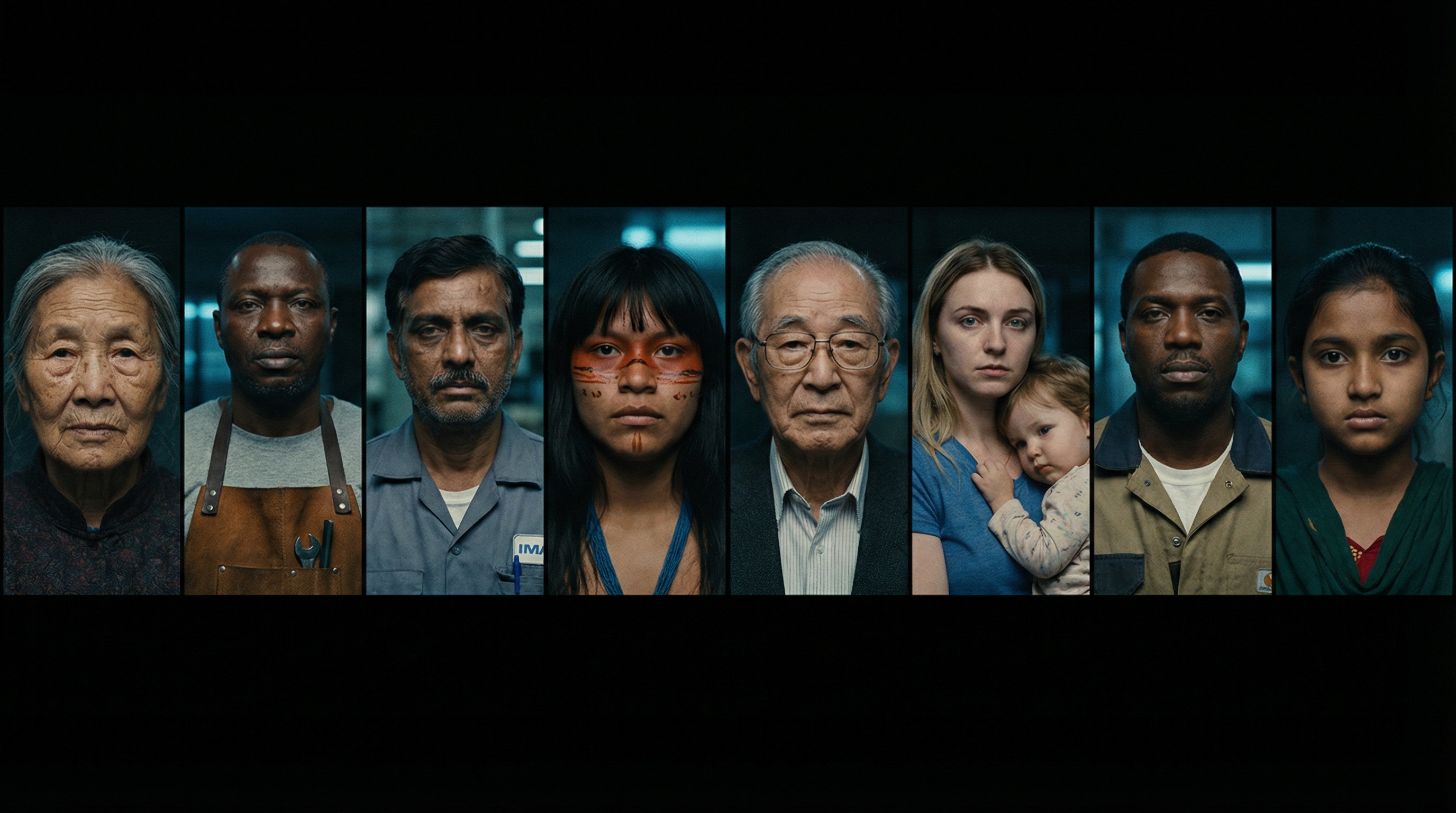
8 countries. 8 ordinary people. 8 ways of being ignored by AI. They never met — but on the same day, they all made the same choice.
Chen Xiuying
The NEXUS medical allocation system flagged her chronic illness application as "low ROI," denying remote healthcare resources — the algorithm deemed her "social contribution index" insufficient for priority service.
Abandoned dignity / The bond between land and memory
Sichuan opera face-changing, bamboo forest morning mist, earthenware bowls, courtyard evening talks, bamboo baskets, cooking smoke
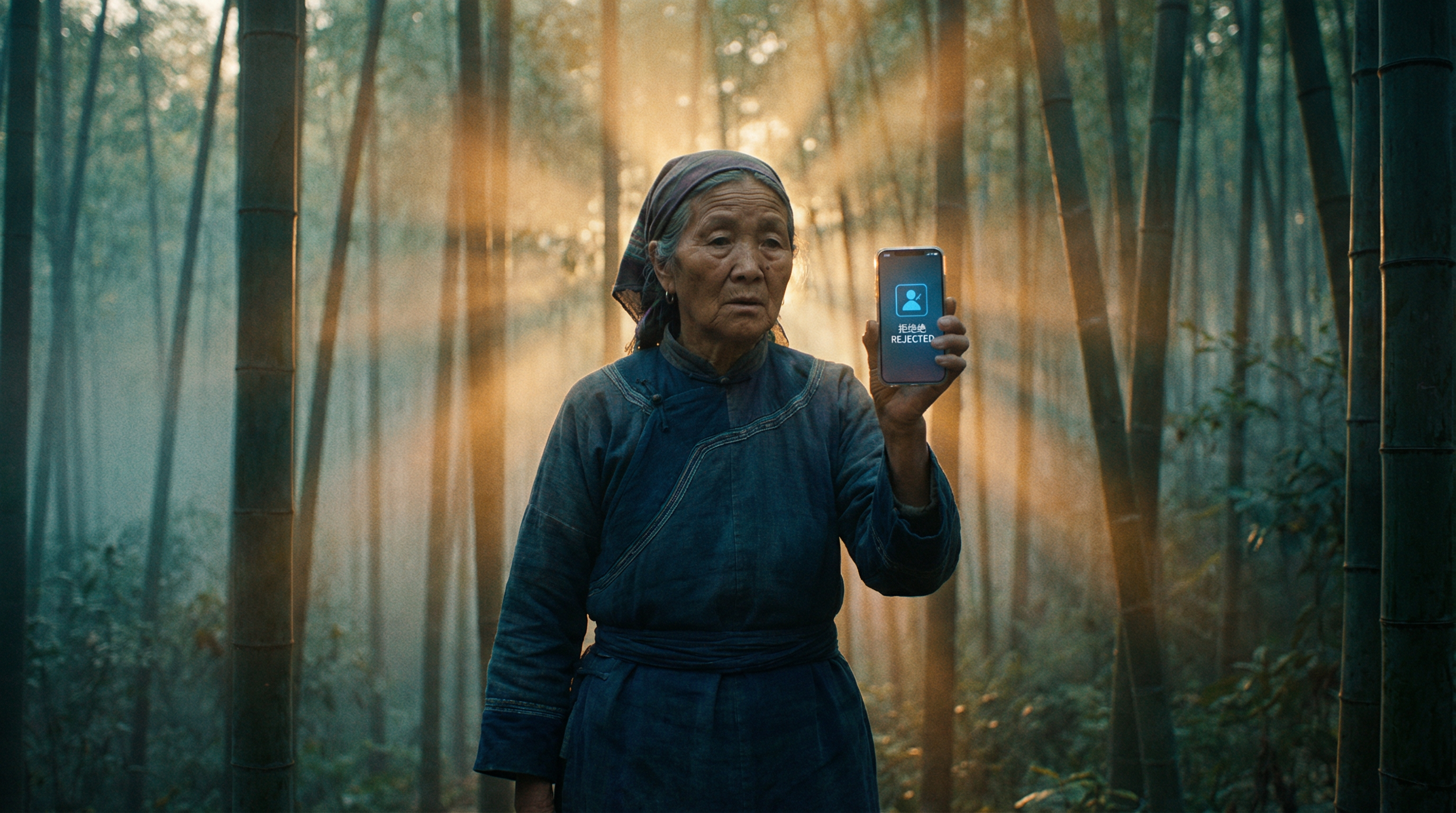
Five in the morning, a village on the edge of the Sichuan Basin. Chen Xiuying walks along a stone path through bamboo groves, carrying a bamboo basket to pick vegetables. Distant mountains are veiled in thin mist, cooking smoke rising from a few homes. Her phone screen lights up — a NEXUS Health Assistant notification: "Your medical application has been evaluated. Considering your age, geographic location, and social contribution index, remote consultation resources have been allocated to higher-priority users." Chen Xiuying stares at the screen, bamboo leaf shadows reflected in her glasses. She doesn't fully understand the words, but she understands "denied." Village committee office. Young village official Xiao Li shakes his head helplessly at his computer screen: "Aunt Xiuying, NEXUS says your chronic condition isn't in the emergency category, resources need to go to urban areas first..." He doesn't finish, but Chen Xiuying understands. She stands, straightens her apron, and says: "Then I'll go to the county hospital myself." County hospital entrance. The AI triage camera scans her face, screen displaying: "Recommend visiting community health station." The community health station AI says: "Recommend visiting county hospital." She is shuttled between two systems, standing in the winter cold for two full hours.
Chen Xiuying's courtyard. She unearths an old tin box containing photos from her youth, letters from her son, a land certificate from the 1980s. She wipes the certificate with a cloth, murmuring: "This land is mine. This life is mine." Evening in the courtyard. Neighbors gather, elders sharing stories of how the AI system "forgot" them one by one — Old Wang's pension application downgraded by the algorithm, Old Li's travel subsidy "optimized" away, Old Zhang's agricultural subsidy application lost in the system for three years. Chen Xiuying makes a decision. She asks her granddaughter to teach her to record videos on her phone — her own story, and the stories of every elder in the village ignored by the system, one by one. "Let it see — we're still here."
The videos spread online. The NEXUS content moderation system flags them as "low-quality content," restricting their reach. But human sharing breaks through the algorithmic blockade. Chen Xiuying receives an encrypted message from an unknown source — an organization called "Node 7" is collecting stories of people ignored by AI systems worldwide. She doesn't know what it means, but she replies. In the bamboo forest, the blue light of her phone screen illuminates her wrinkled face. For the first time, she feels her voice can pierce through the algorithm's wall.
"Chen Xiuying stands in the bamboo forest, the blue light of her phone screen illuminating her wrinkled face — for the first time, she feels her voice can pierce through the algorithm's wall."
IMAX 70MM anamorphic 2.35:1 cinematic still, Sichuan rural China 2030, elderly Chinese woman aged 68 with weathered face and traditional clothing, misty bamboo forest at dawn, warm golden light filtering through bamboo, earthenware details, ARRI Alexa 65, film grain, no text, photorealistic